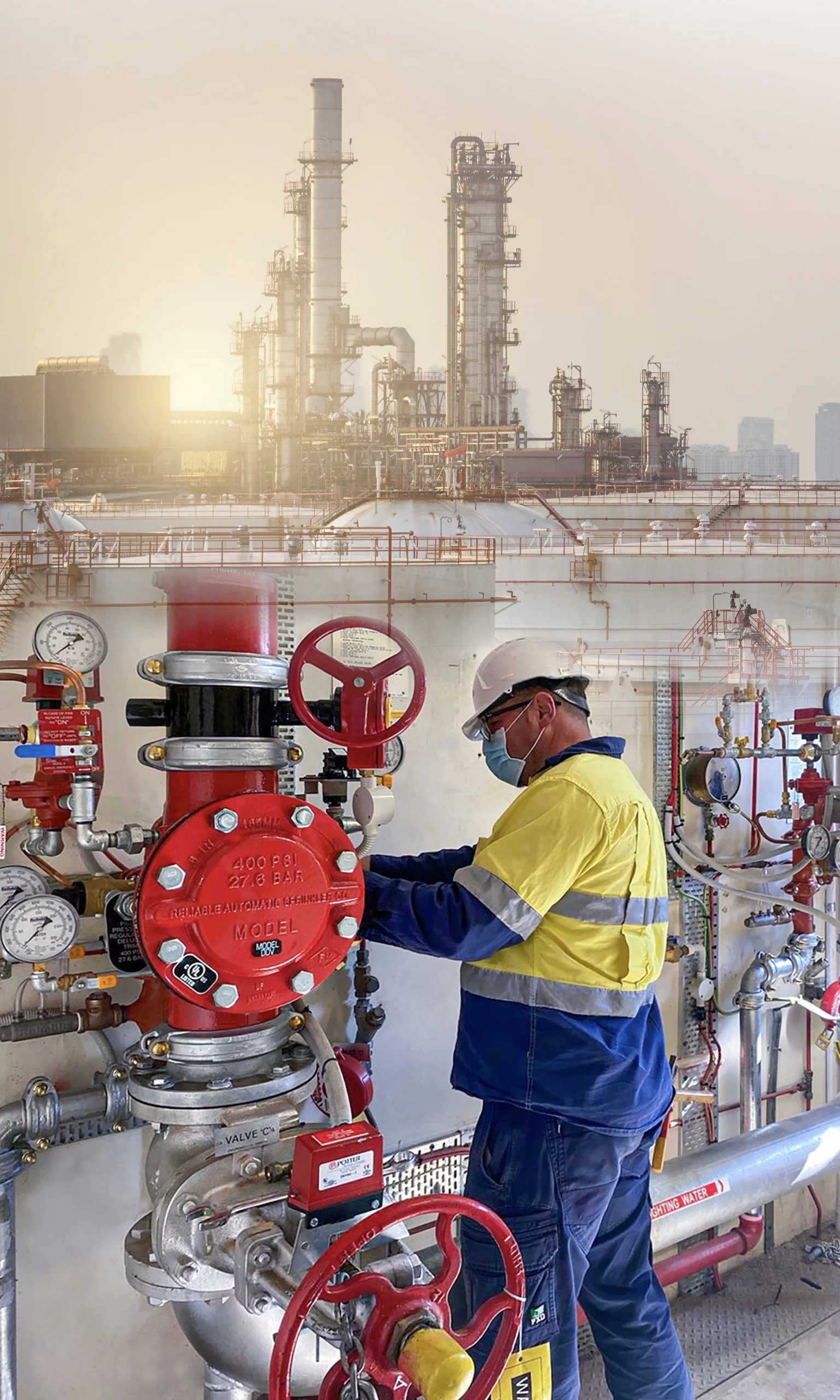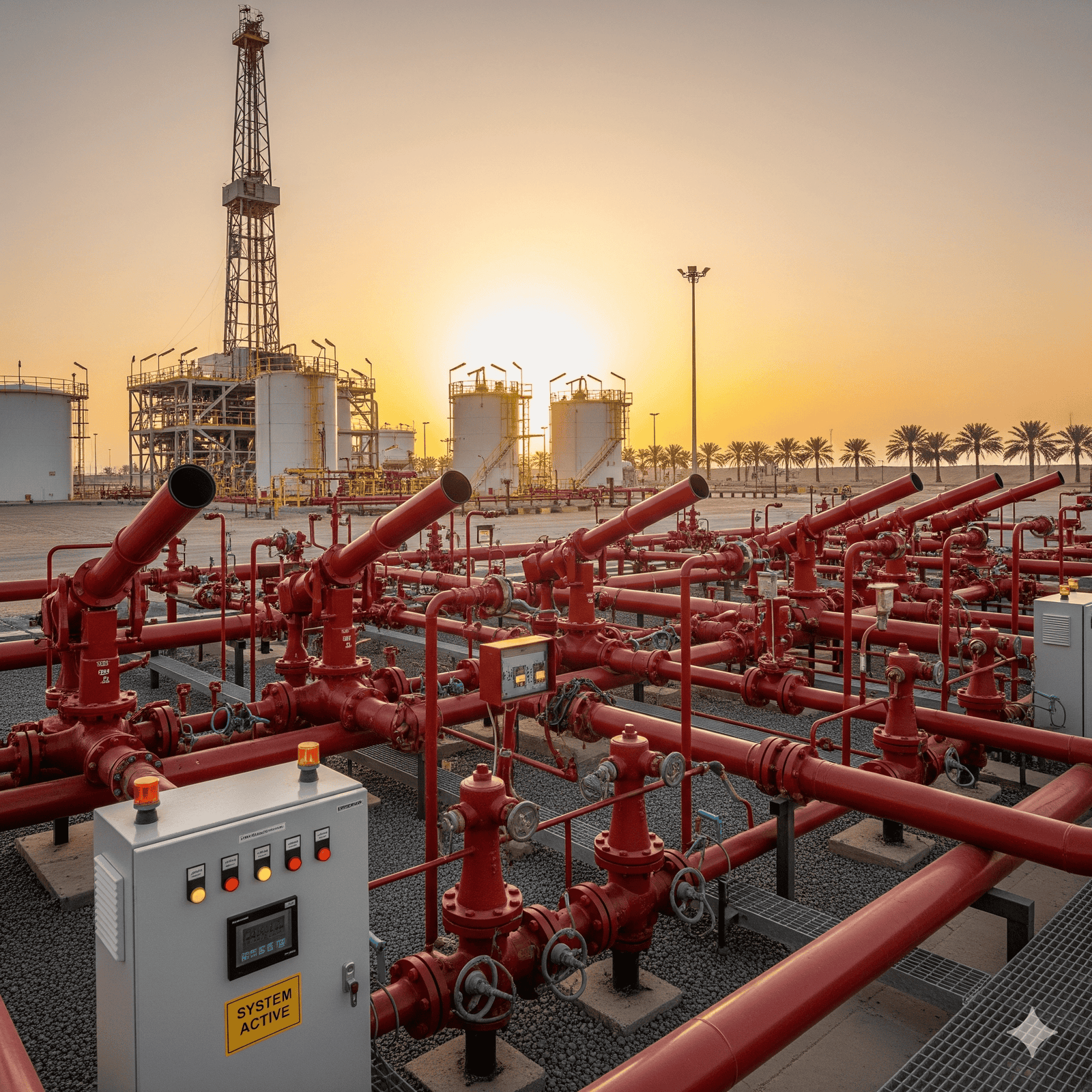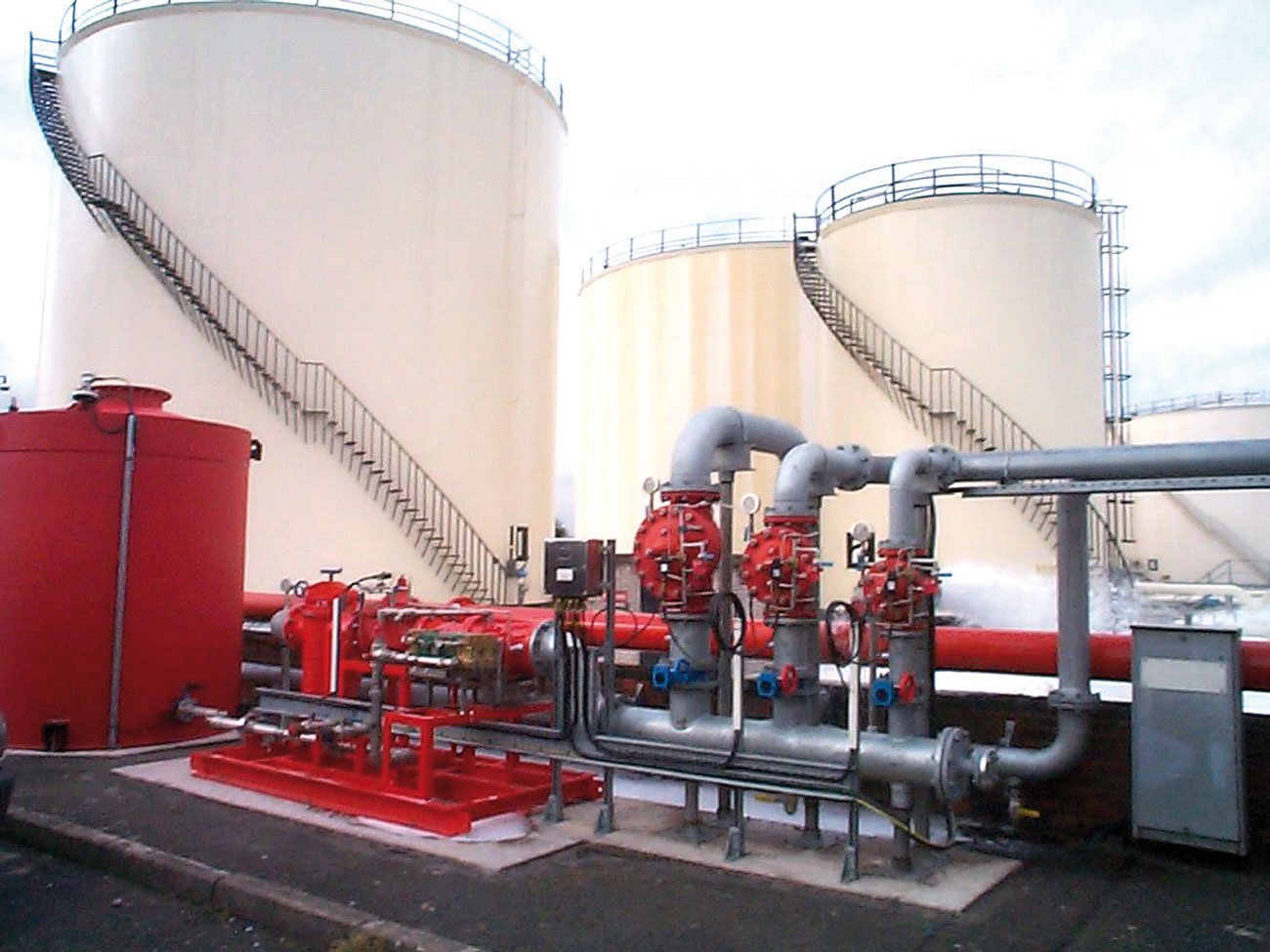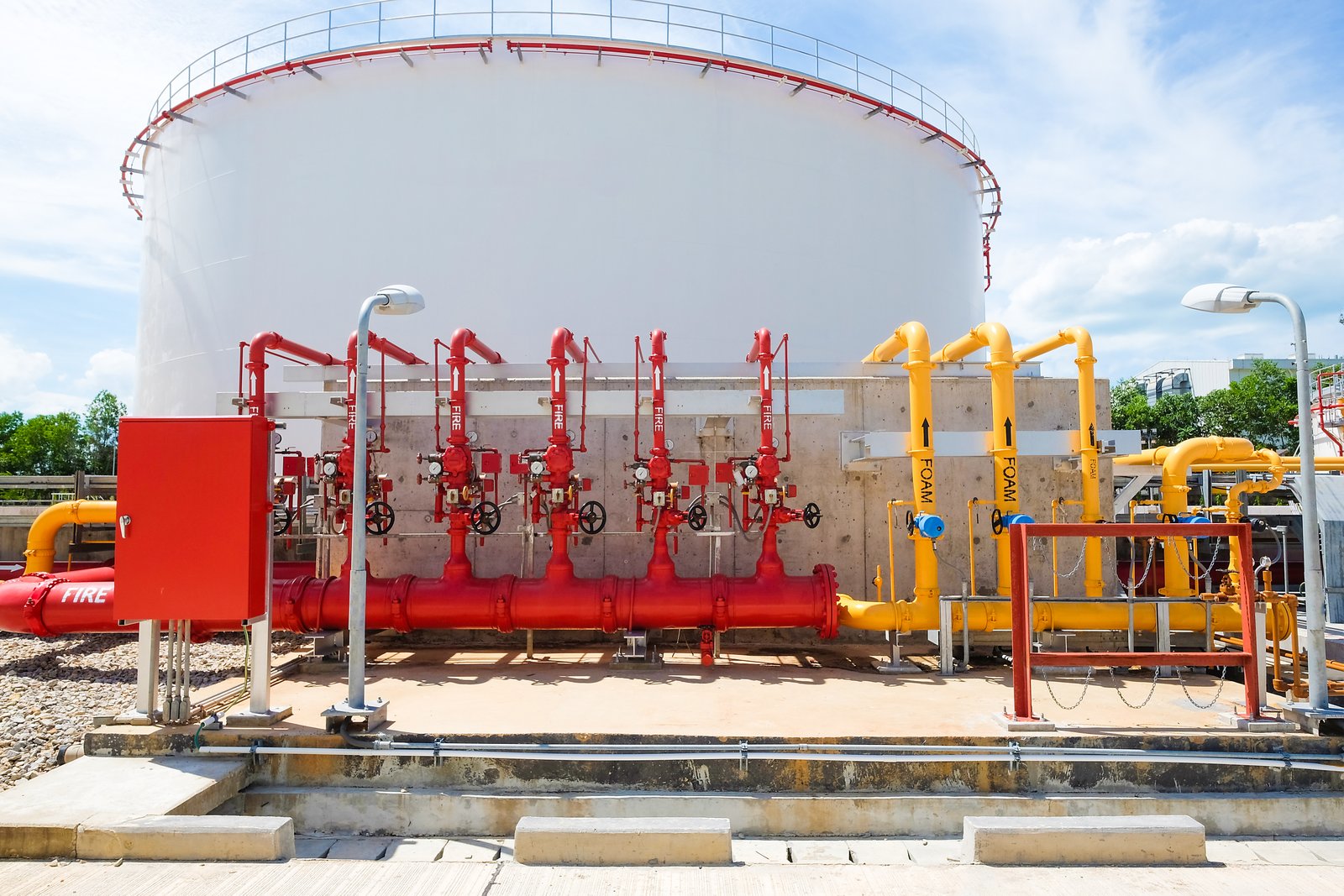
We design, supply, install, commission, and certify engineered high-hazard fire suppression architectures for oil, gas, and petrochemical operations across the Kingdom of Saudi Arabia. Operating in full compliance with the High Commission for Industrial Security (HCIS Directives SAF-01 through SAF-14), Saudi Building Code (SBC 801), NFPA Standards (11, 15, 16, 20, 72, 2001), and Saudi Civil Defense (Salamah) mandates, our fire safety solutions safeguard upstream exploration, midstream transport, and downstream refining assets against extreme thermal radiation and jet fire incidents.
Upstream wellheads, tank farms, and downstream refinery units present severe thermal radiation and rapid flame propagation risks requiring specialized active protection systems.

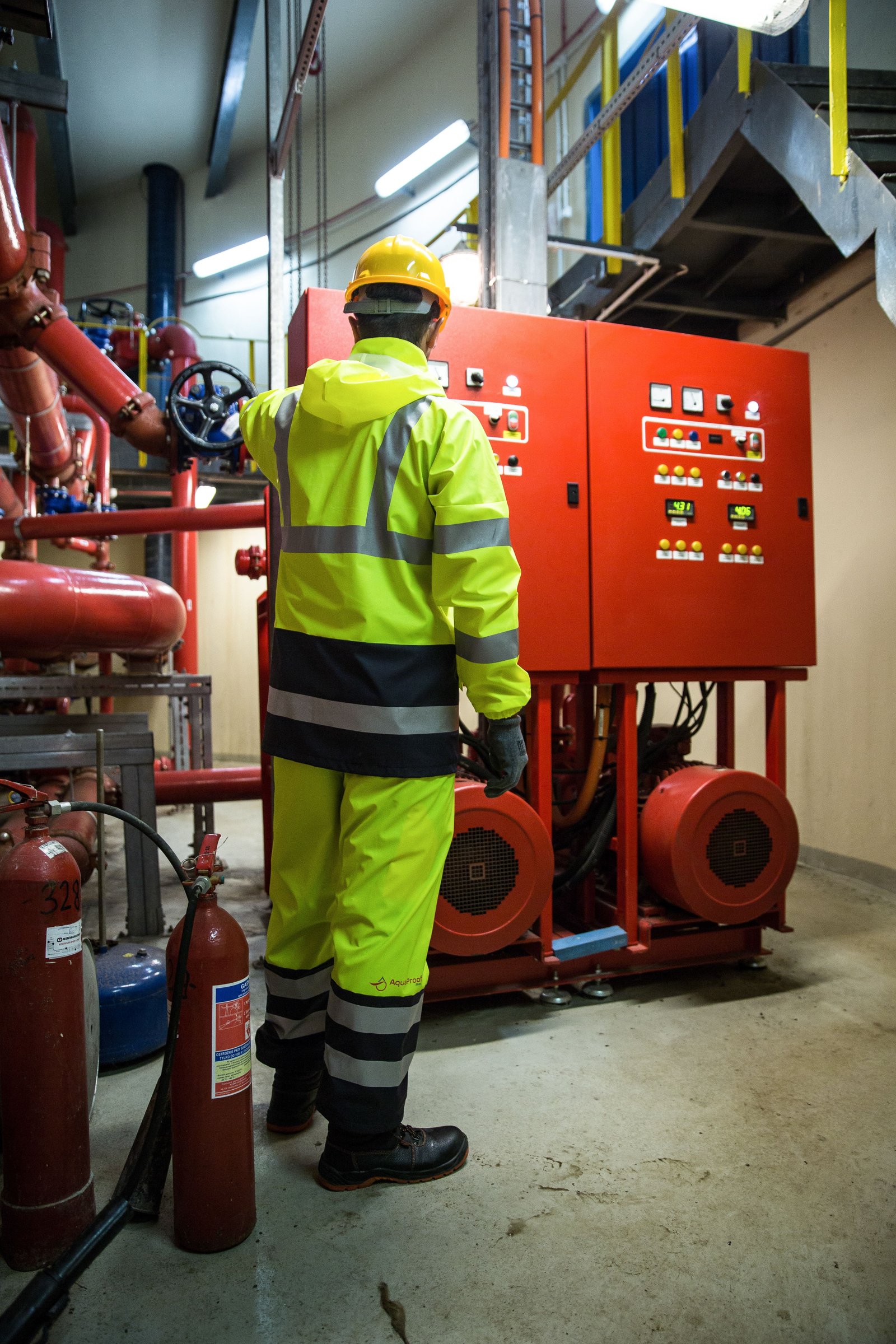
We manage every phase of private fire water main and pump house development, taking your project seamlessly from blank blueprints to official Civil Defense approval.

Comprehensive physical inspections of existing firewater ring mains, foam proportioners, deluge valves, and hazardous gas detection grids.
Complete hydraulic calculations, foam sample analysis, and system trip-testing logs prepared for official HCIS and Civil Defense compliance reviews.
Final documentation submission, including UL/FM design certificates, product technical data sheets, and site audit logs to secure Civil Defense operating permits.
Energy infrastructure operating under Ministry of Interior HCIS jurisdiction requires strict hazard mapping, certified component integration, and complete lifecycle documentation approval.


Whether upgrading an active refinery module or preparing an HCIS tender submission, our certified fire engineers provide fast-track site audits, code compliance verification, and itemized estimates.
Sub-second detection of hydrocarbon gas leaks and rapid extinguishant discharge in enclosed control rooms prevents secondary explosions and process destruction.
Sub-second optical flame detection and continuous combustible gas leak monitoring engineered specifically for Class 1, Division 1 / Zone 1 hazardous environments like gas compressors and manifold skids.
Total-flooding clean-agent systems (FM-200, Novec 1230, Inergen) installed in substation buildings, control centers, and analyzer shelters to extinguish electrical fires without damaging mission-critical electronics.
Our fire protection engineering services cover all energy operational zones across the Kingdom’s key economic hubs and industrial cities.
Ensure your energy asset fully complies with HCIS directives, SBC 801 standards, and Civil Defense guidelines. Submit project requirements to receive an itemized BOQ estimate.

Bahrah, 23342, Jeddah, KSA
sales@triad.sa
Monday – Friday, 8:00 AM – 5:00 PM (AST)
HCIS SAF-04 (Fire Protection Systems) and SAF-08 (Storage Tanks and Storage Vessels) govern tank farms, mandating rim-seal foam systems, fixed cooling water spray rings, and secondary containment foam coverage.
IR3 optical detectors evaluate three distinct infrared wavelength bands to verify organic hydrocarbon flames at long distances (up to 60+ meters) while ignoring false alarm sources like solar radiation, hot piping, and arc welding.
Yes, modern fluorine-free foam (F3) concentrates listed by UL/FM under NFPA 11 are approved for hydrocarbon fire protection when paired with properly matched proportioning equipment and foam discharge devices.